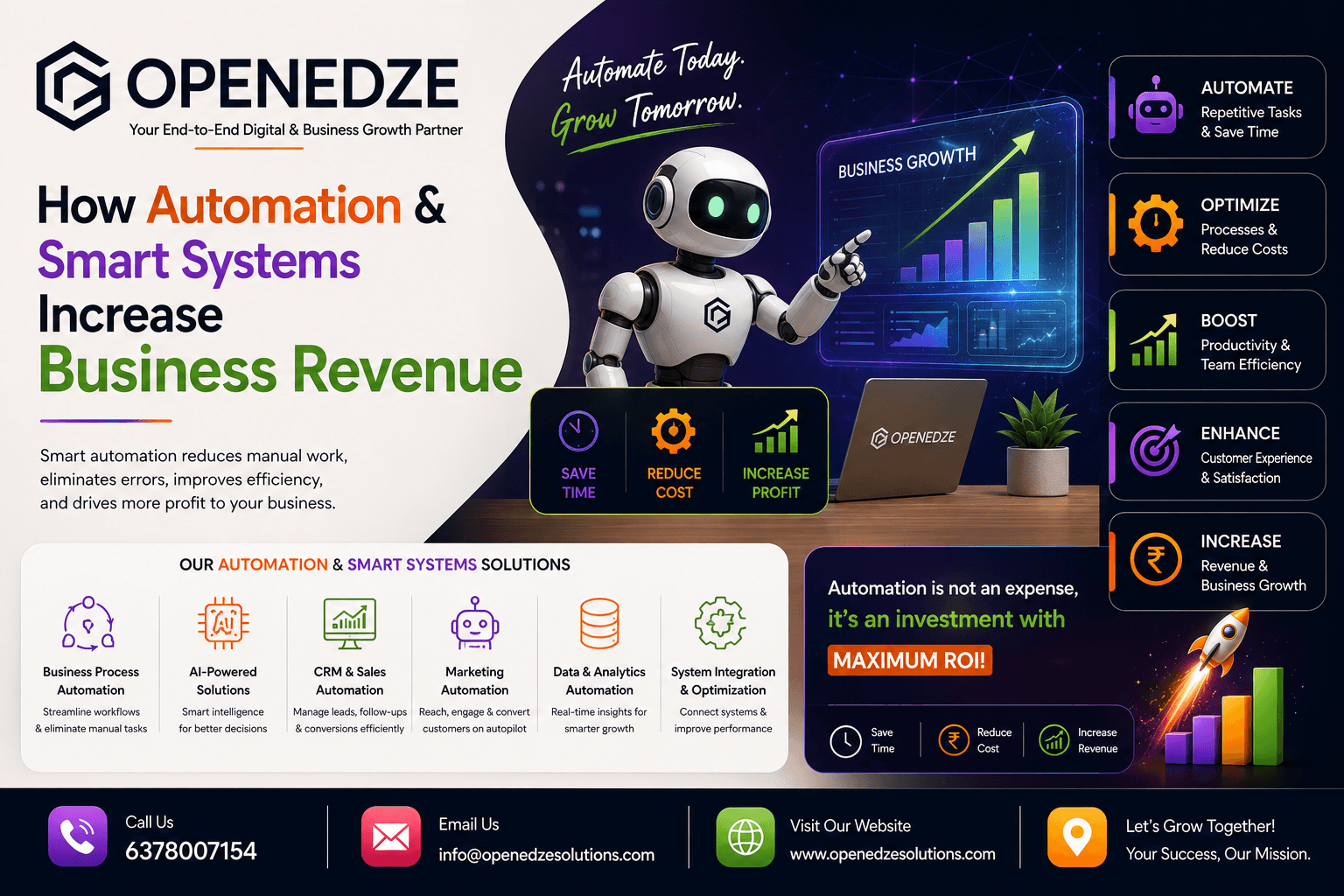
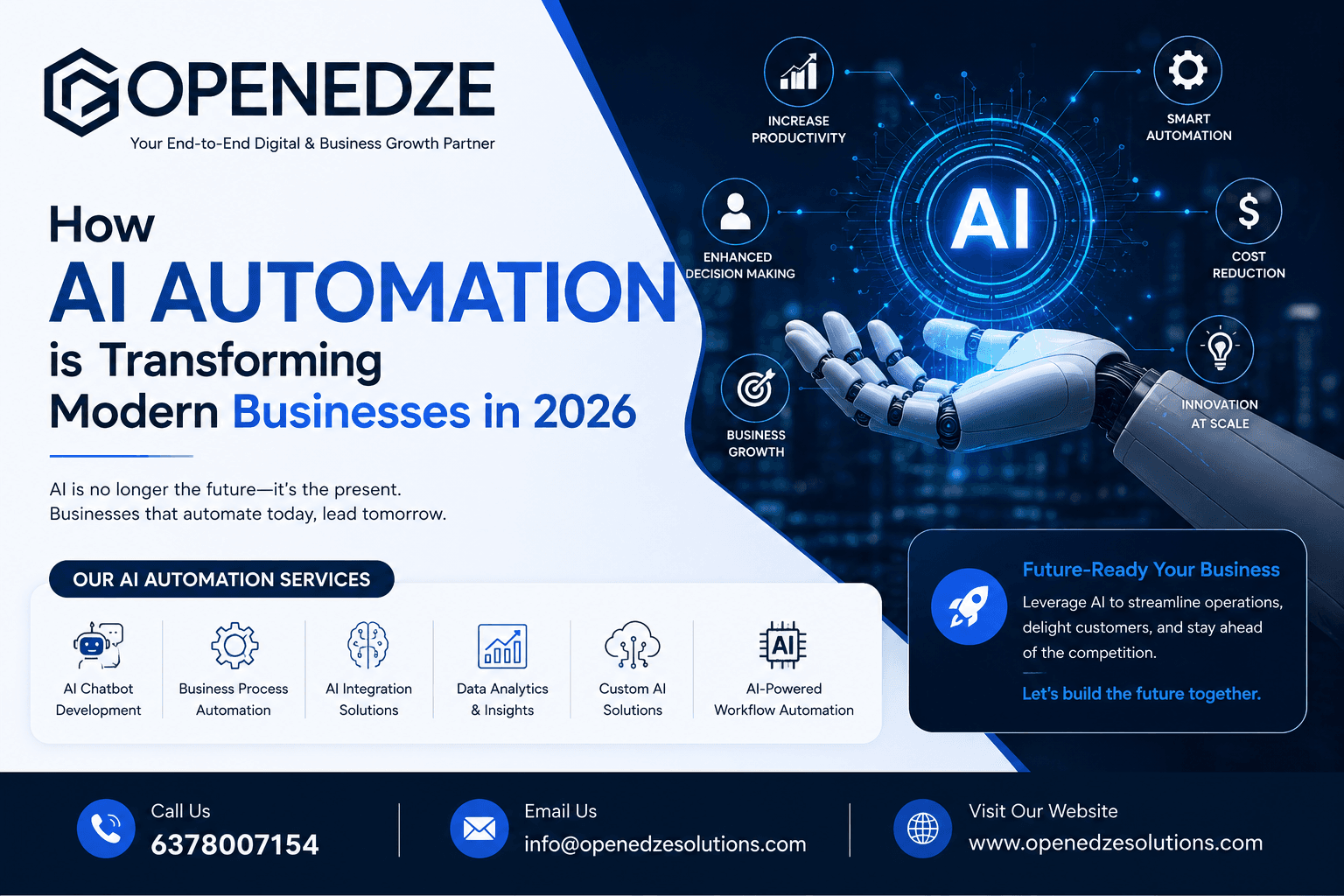
AI automation in 2026 is no longer a futuristic experiment. It is becoming the operational layer behind faster sales response, cleaner customer service, better reporting, smarter documentation, and more disciplined decision-making.
For modern businesses, the opportunity is not simply to add AI tools. The real advantage comes from designing workflows where people, data, software, and AI agents work together with clear accountability.
Key Insights
AI automation works best when it is mapped to revenue, cost, risk, or customer experience outcomes.
The highest ROI use cases usually start with repetitive workflows: lead qualification, CRM updates, support triage, reporting, document preparation, and follow-ups.
Businesses need governance, data quality, and escalation rules before scaling AI into sensitive operations.
Why AI Automation Matters for Modern Businesses
Every growing company faces the same operational tension: more leads, more customers, more documents, more service requests, and more decisions, but limited management attention. AI automation helps absorb this complexity without increasing headcount at the same pace.
In practical terms, AI can summarize conversations, classify inquiries, draft responses, prepare reports, route tasks, identify anomalies, and recommend next actions. When these capabilities are connected to a CRM, website, support desk, or internal dashboard, they become a business system instead of a standalone tool.
AI Workflows: From Manual Tasks to Intelligent Operations
A workflow is where AI becomes useful. Instead of asking a team to manually copy data between forms, spreadsheets, email, CRM, and invoices, a well-designed workflow captures information once and moves it intelligently through the business.
For example, a website inquiry can be scored, assigned, acknowledged, logged in CRM, matched with the right service, and placed into a follow-up sequence. The sales team still owns the relationship, but AI removes the repetitive coordination work.
How AI Automation Reduces Operating Costs
Cost reduction does not mean replacing the human side of the company. The strongest automation programs remove wasted movement: repeated data entry, missed follow-ups, duplicate reporting, unclear task ownership, and slow document preparation.
When automation handles routine work, teams can focus on judgment, relationship-building, compliance review, and strategic execution. That is where premium businesses create leverage.
Scaling Systems Without Losing Control
The next phase of AI consulting is not about adding more tools. It is about building governance: who can approve an AI-generated response, what data can be used, where humans must review outputs, and how errors are tracked.
Enterprise-grade automation needs role-based access, audit trails, secure integrations, and clear escalation paths. This is especially important for finance, legal, compliance, healthcare, education, and other trust-sensitive industries.
A Practical AI Consulting Roadmap for 2026
A strong AI roadmap begins with business clarity. Leaders should identify where delays, leakage, repetitive tasks, or customer friction are creating measurable cost. Once the problem is clear, technology selection becomes easier.
Openedze Solutions typically recommends a phased approach: workflow audit, automation blueprint, prototype, team training, performance dashboard, and ongoing optimization. This keeps implementation focused and accountable.
Build an AI automation roadmap for your business
Openedze can help you identify high-ROI automation opportunities across sales, service, reporting, client onboarding, and internal operations.
Book AI Automation ConsultationFAQs
What is AI automation in business?
AI automation combines software workflows, business data, and AI models to complete repetitive tasks, support decisions, generate drafts, route work, and improve operational speed.
Which business processes should be automated first?
Start with repetitive, high-volume, measurable workflows such as lead qualification, CRM updates, support triage, document collection, reporting, and follow-up sequences.
Is AI automation suitable for small businesses?
Yes. Small businesses often benefit quickly because even a few automated workflows can reduce admin effort, improve response time, and create a more professional client experience.
How does Openedze help with AI automation?
Openedze helps audit workflows, design automation architecture, identify tools, build implementation roadmaps, and align automation with business growth goals.
Author
Openedze Strategy Desk
Openedze Solutions helps startups, MSMEs, and growing companies build stronger operating systems across registration, compliance, funding readiness, digital presence, and automation.