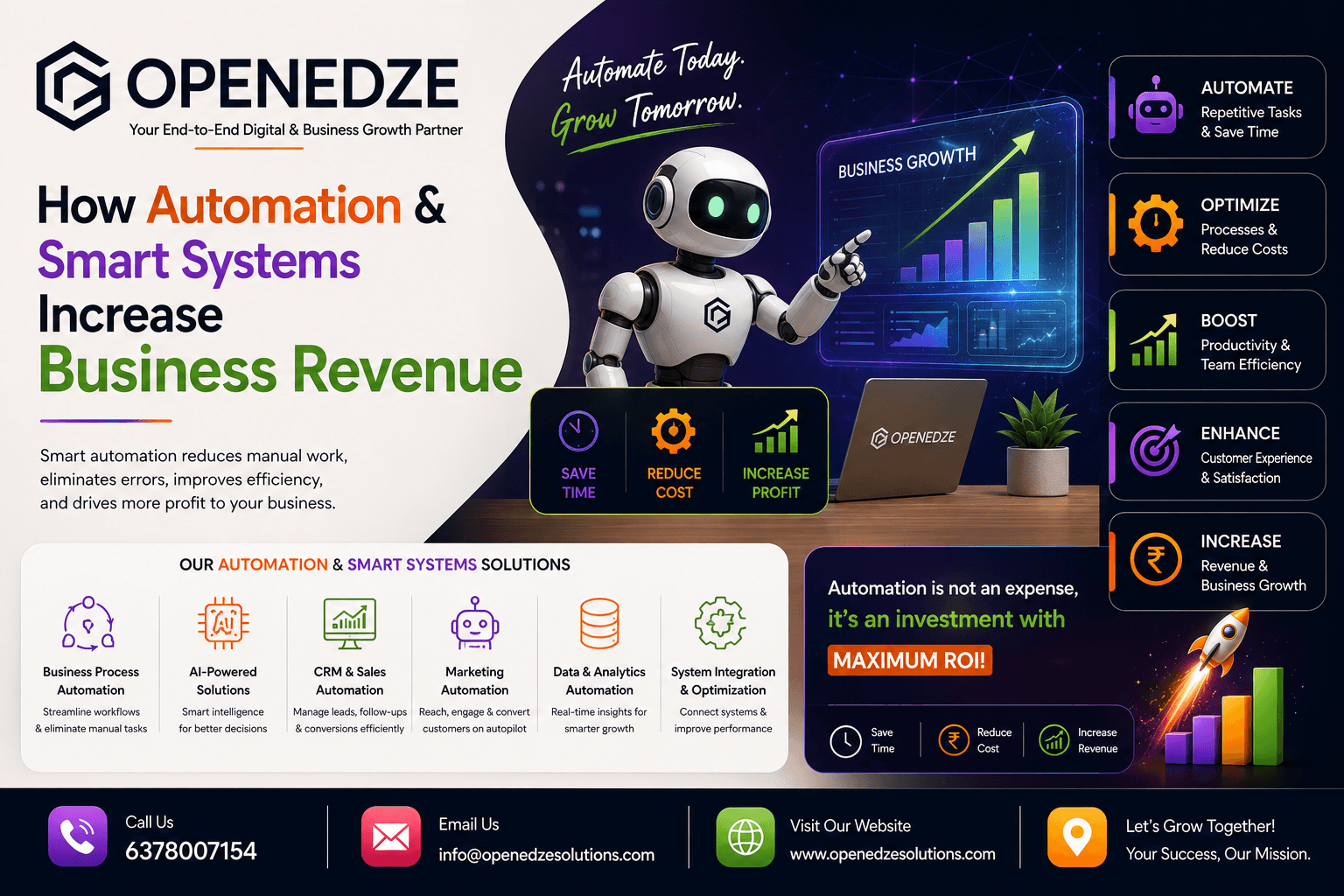
Many businesses do not need more leads first. They need better systems for managing the leads, clients, tasks, follow-ups, and decisions they already have.
Automation and smart systems increase revenue by reducing leakage. They make sure prospects are followed up, clients are onboarded, teams know priorities, and leadership can see what is working.
Key Insights
Revenue operations improve when CRM, workflow automation, reporting, and client management are connected.
Automation increases revenue by improving speed, consistency, visibility, and accountability.
Smart systems help founders move from memory-based management to dashboard-based management.
Revenue Leakage Is Usually a Systems Problem
Lost revenue often hides in everyday operations: unanswered inquiries, delayed quotes, unclear ownership, missed follow-ups, incomplete documentation, and weak visibility into the sales pipeline.
A smart system brings these gaps into the open. Once leads, tasks, client stages, documents, and follow-ups are visible, management can improve the process instead of guessing where growth is stuck.
CRM Systems Turn Conversations Into Revenue Visibility
A CRM is more than a contact database. It is the central operating system for sales, service interest, client stage, follow-up history, and revenue forecasting.
When implemented properly, a CRM helps teams understand which prospects are warm, which services are in demand, which follow-ups are overdue, and where deals are getting stuck.
Automated Workflows Improve Speed and Consistency
Revenue grows when the customer experience becomes consistent. A prospect should not wait because a team member forgot to send a checklist. A client should not chase the company for basic status updates.
Automated workflows can send acknowledgements, assign tasks, request documents, trigger reminders, update CRM stages, and notify teams when a client is ready for the next step.
Analytics Help Leaders Make Better Revenue Decisions
A smart business system does not just automate work. It generates insight. Leaders should be able to see lead source performance, conversion rates, pending tasks, revenue by service, and delivery bottlenecks.
This turns growth from a feeling into a management discipline. The company can invest in channels that work, fix weak stages, and forecast capacity before operations become overloaded.
Scaling Operations Without Adding Chaos
Without systems, growth creates more coordination pressure. With systems, growth creates more data, better accountability, and repeatable delivery.
For scaling companies, the goal is to make the business less dependent on scattered chats, individual memory, and manual reporting. Smart systems create a shared operating truth across departments.
Turn your operations into a revenue system
Openedze can help design CRM, automation, analytics, and client-management workflows that reduce leakage and improve growth visibility.
Design My Smart SystemFAQs
How can automation increase business revenue?
Automation improves revenue by reducing missed follow-ups, speeding up response time, standardizing client onboarding, and giving leaders visibility into conversion and delivery bottlenecks.
Do small businesses need a CRM?
Yes, especially when inquiries come from multiple channels. A CRM helps centralize leads, follow-ups, service interest, client status, and sales performance.
What are smart systems in business?
Smart systems combine CRM, workflows, analytics, automation rules, and client management so teams can operate with speed, consistency, and visibility.
Can automation replace a sales team?
Automation should support the sales team, not replace relationship-building. It handles repetitive coordination so people can focus on trust, negotiation, and closing.
Author
Openedze Strategy Desk
Openedze Solutions helps startups, MSMEs, and growing companies build stronger operating systems across registration, compliance, funding readiness, digital presence, and automation.